
We reworked our AI harness around what the model does best, and the AI website builder got better. That is not the usual product story, which is why we wanted to tell it properly.
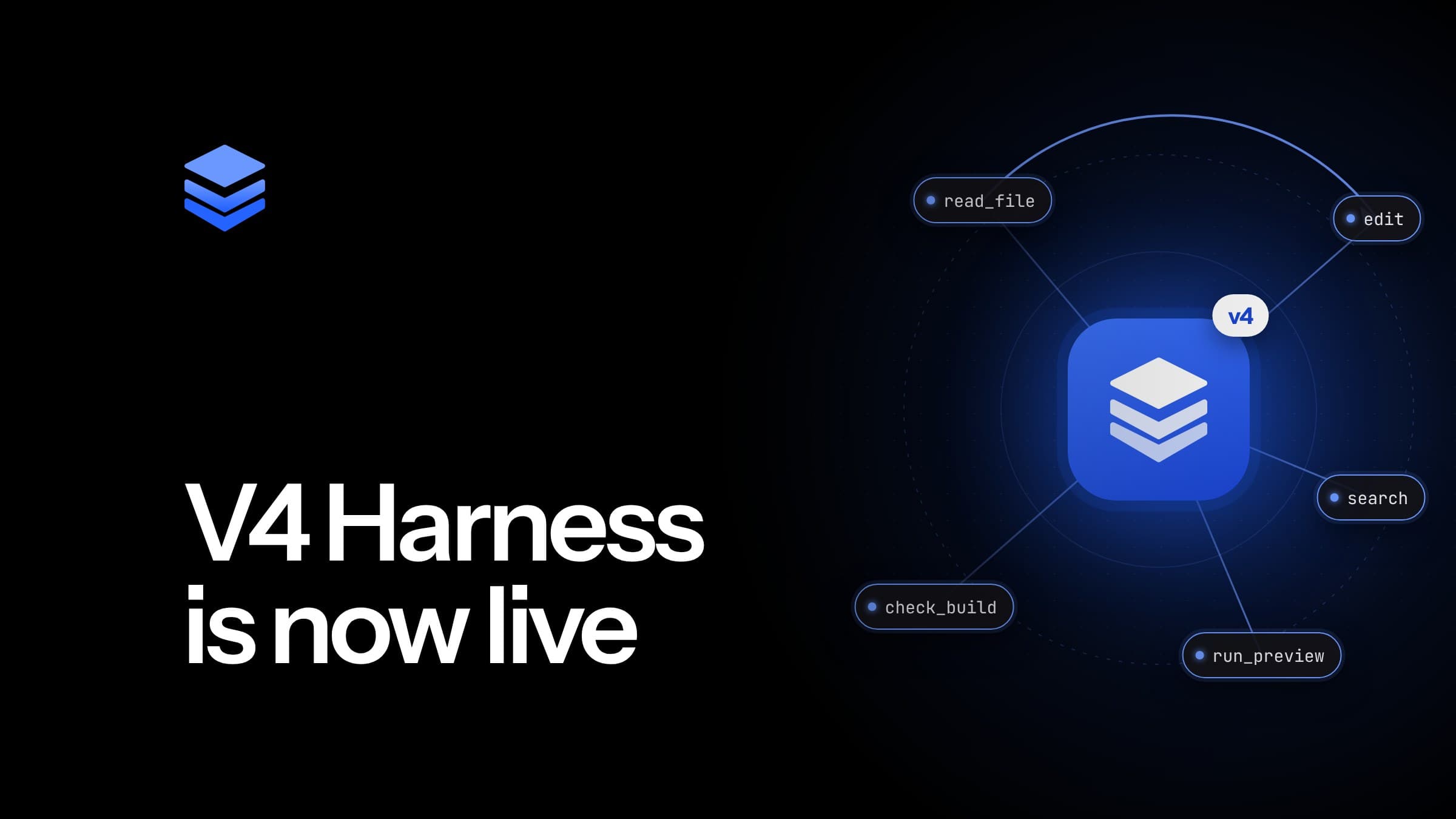
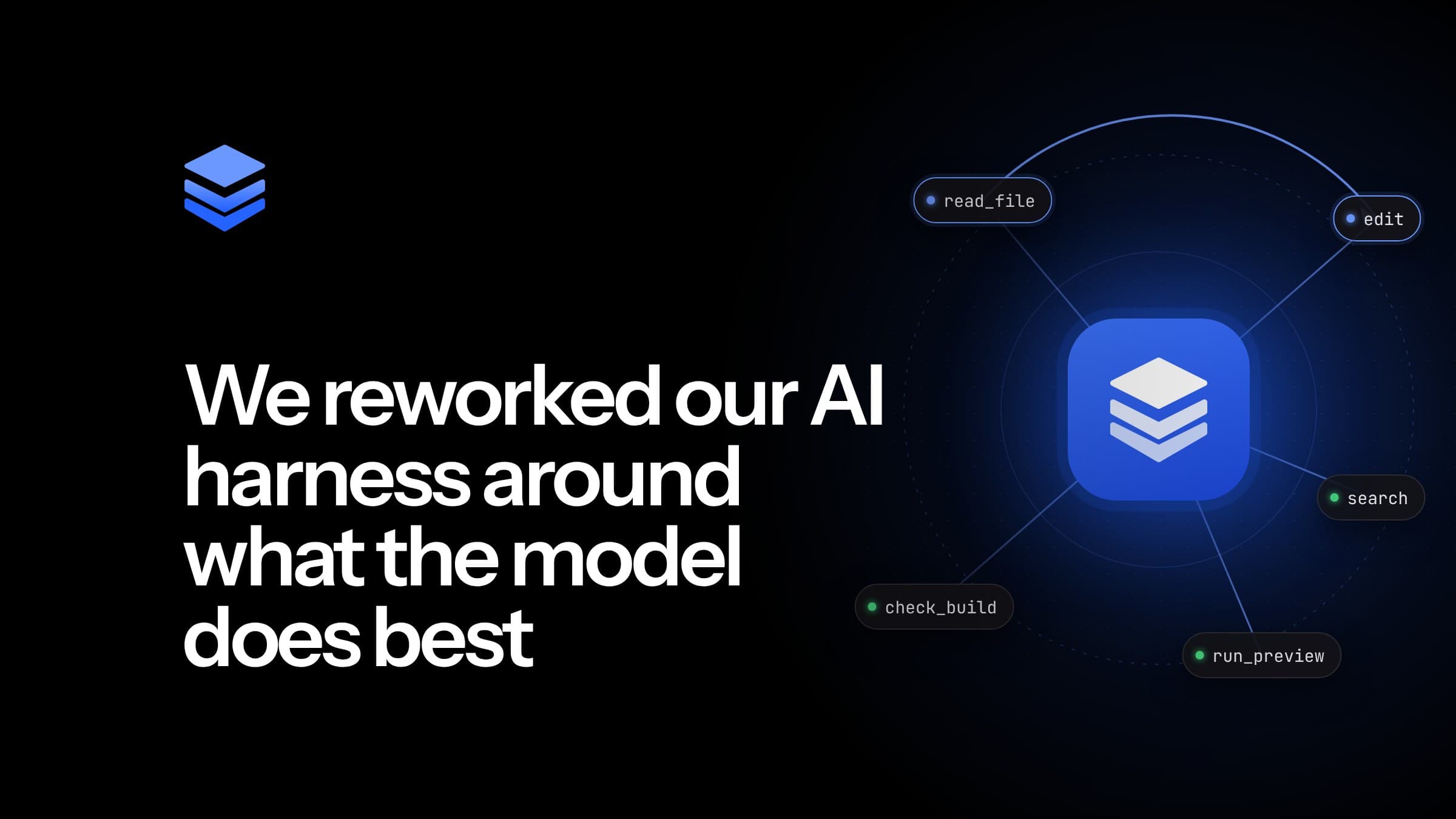
An AI harness is the software that sits around the model: the tools it can use, the feedback it gets, and the steps a build is forced to follow. For a long time, ours kept growing. This time we rebuilt it around what today's models are already good at, giving the AI accurate tools and honest feedback instead of more scaffolding. The new harness, which we call V4, is simpler. In our early tests it builds a first site faster, and the sites themselves are better. You can start a free Stack48 site and try it on your own brief, or read how a Stack48 site comes together.
The moment we realised the machinery was in the way
We ran the same brief through a lean, general-purpose coding agent with no website-specific machinery. It produced a better site than our own harness.
That was a hard thing to look at. Our harness was taking 8–15 minutes to finish a first build. Every addition we had made — a design skill, page planning, waves of helper agents, repair passes — had made it slower without making the output better.
The insight was uncomfortable, and useful. We had been compensating for older models with machinery. Today's models are strong enough that the machinery gets in their way.
If you want a broader look at that comparison, we have already written about Stack48 versus a general-purpose coding agent. One caveat is worth repeating: figures from simpler demos, such as a static page, are not comparable to a full site with forms, a database and publishing.
The principle: do what the best agents do
So we started again. We studied how the best coding agents actually behave, wrote that down as a behaviour spec with no code in it, and rebuilt the harness in a clean room.
One rule decided what stayed. A feature remains only if a top coding agent would have it, or if our platform genuinely needs it: preview, publishing, and the site's database. Those are the parts that make Stack48 a complete platform rather than a prompt box, including Stack48 Cloud for publishing and hosting.
If it did not meet that test, it did not come with us.
What actually changed
Four differences do most of the work.
The AI starts with the brief. The old harness made extra AI calls to extract a brief, paused for a style picker, and then had the platform write a theme, stubs and page wiring before the main model began. In V4, the AI gets the brief and starts building. That is also how editing in the Stack48 editor now works: you ask, and the harness gets on with it.
We stopped "helping" in ways that patched the output. As part of the rework we inventoried 123 platform behaviours that rewrote themes, fixed CSS, forced repair rounds or nudged the AI to review itself. We removed 59 of them, replaced 60 with honest tool feedback, and kept 4 only where the platform itself needs them.
Checks happen when the AI chooses, not in a forced loop. The old harness ran a forced build-and-fix loop, with up to five extra passes of up to 10 minutes each. V4 gives the AI a check it can run when it chooses: type-check, build, lint and form tests.
A build is just a chat. The old product had separate pipelines for wizard builds, prompt builds, imports, editor edits and admin. V4 has one harness. A build is a chat whose first message is the brief. You can also choose Plan mode, which shows a plan card with progress, Chat mode for questions, or Build mode when you just want it done. The same harness can rebuild an existing website or add pages to a complete multi-page website.
Old harness and V4, side by side
- Pipelines. Before: separate paths for wizard builds, prompt builds, imports, editor edits and admin. Now: one harness. A build is just a chat whose first message is the brief.
- Before the AI starts. Before: extra AI calls to extract a brief, a style-picker pause, and a theme, stubs and page wiring written by the platform. Now: the AI gets the brief and starts building.
- Platform "help". Before: 123 behaviours that patched and repaired the AI's work, including theme rewrites, CSS fixes, forced fix rounds and self-review nudges. Now, as part of the rework: 59 removed, 60 replaced by honest tool feedback, and 4 kept only where the platform needs them.
- Editing. Before: a custom edit format, plus forced steps. Now: simple edit and write tools that report exactly what happened.
- Checks. Before: a forced build-and-fix loop, with up to five extra passes of up to 10 minutes each. Now: a check the AI runs when it chooses, covering type-check, build, lint and form tests.
- Helpers. Before: two waves of helper agents, each working on the site, where clashing edits could be thrown away. Now: helpers start early from one shared design brief. The lead builds the home page while they build the other pages. We have written before about helper agents in the editor; V4 changes how that work is started.
- Context. Before: a heavy code map rebuilt every round. Now: a small, accurate starter map, so the AI does not need to explore.
- Models. Before: several models, one per role, with limits set in server config. Now: one model, chosen and tuned by us, and set in code.
- Chat. Before: a summary written afterwards. Now: a live stream of what the AI is reading, writing and checking.
- Sessions. Before: several temporary stores plus a separate summariser. Now: one durable session history that survives restarts.
- Modes. Before: build only. Now: Build, Plan (a plan card with progress) and Chat.
What you'll notice
This is the part that matters if you just want a site.
A faster first build. In our early tests, a first build finished in around 8 minutes end to end, against 8–15 minutes before. Compared with the slower end of that old range, that can be up to around 45% quicker. It is one build, not a typical time, so treat it as an early indication rather than a promise.
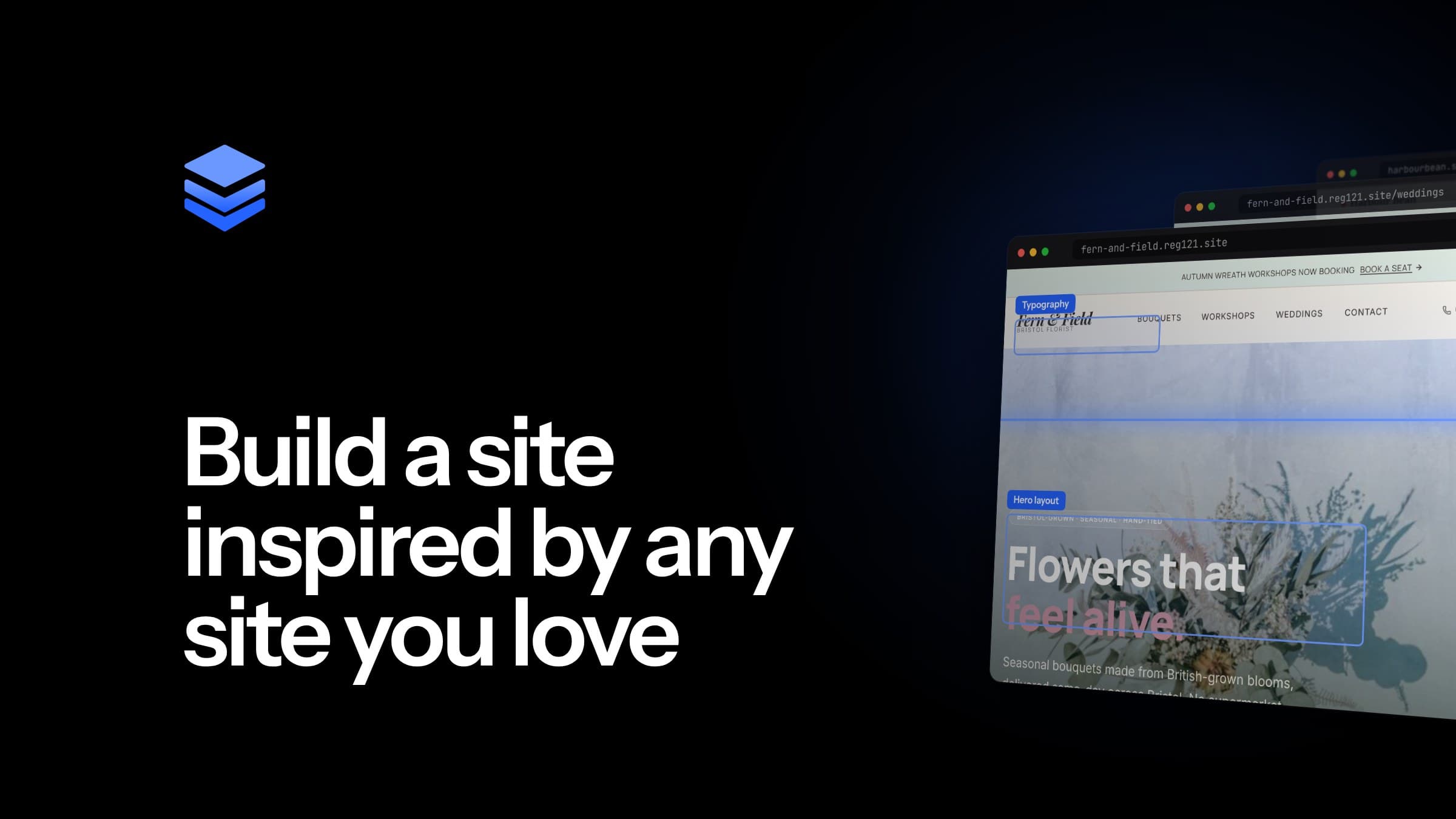
Sites designed fresh. Each site is designed for its brief, not assembled from pre-made sections. That is the point of an AI website builder that starts from intent rather than a library of blocks, and it is how we already talk about building a complete multi-page site. If you would rather start from a look you already like, the editor can also build a site inspired by a site you love.
Watch it work. In the Stack48 editor, the chat shows the AI reading, writing and checking in real time, so you can follow the build as it happens.
Your choice of mode. Use Plan mode for big changes, with a plan card that shows progress. Use Chat mode for questions. Use Build mode when you just want it done.
Forms that work. Every form saves to your site's database, and is tested before the build finishes.
Site Admin, built in. Every site gets a back office, with tables and charts. You change it by asking a small assistant, and it is ready the moment you open it.
Every Stack48 site, including the Free plan, comes with Stack48 Cloud included, so publishing and hosting are part of the same platform rather than a separate setup. You can connect a custom domain as well, and the same is true on the Pro plan and the Agency plan for people building sites for clients.
We are still measuring cost per build on the new harness, so we are not quoting a saving yet. The Stack48 pricing page has the current plans.
If you care about being found, SEO basics are generated with every page. Designers can work in an AI website editor that can keep up. Small businesses and tradespeople can start from a short brief rather than a blank template. Agencies and web professionals can hand over a finished site rather than a locked-in mockup.
We have also compared Stack48 with other AI website builders, traditional DIY website builders and web agencies, and we have a practical look at what a small business website costs and a plain-English website guide for tradespeople.
Notes for a technical reader
Speed now comes from what the AI writes, not from our own code. The stream runs at about 200 tokens a second, with almost no overhead from the harness. Build time is roughly how much the AI writes, so every word of instruction costs time and money on every round. That is why a shorter, cleaner harness is not only simpler. It is faster.
Small details matter. Passing the AI's own reasoning back to it correctly stopped it re-thinking from scratch at every step.
More helpers is not automatically better. In an experiment, the same work spread across helpers cost about 5× more than one agent doing it alone. V4 delegates once, early, with a shared brief. The lead keeps the home page; the helpers take the other pages.
The platform now behaves like a general development environment, not a pile of website-specific logic. When something fails, we improve the tools and the feedback. We never patch the AI's output.
The cutover is hard. There are no flags and no fallbacks to the old harness. The old code is being retired as we go.
What's next
Site Admin ships with the new harness: a back office on every site, ready when you open it, which you can change by asking a small assistant. From here, we will keep tuning the harness, using the same rule we used to rework it. If a top coding agent would not have a feature, and the platform does not genuinely need it, it does not go back in.
If you want to see it on your own brief, start building on Stack48 for free or read how it works. You can also browse more of this kind of writing in Stack48 Insights.
Related reading
Frequently asked questions
- What changed in the Stack48 AI website builder?
- We reworked the harness that wraps around the AI: the tools, the feedback and the steps a build follows. V4 is a single chat-based harness, rebuilt around what the model is now good at. The AI gets your brief and starts building, with accurate tools and honest feedback instead of the platform patching its work. As part of the rework we inventoried 123 platform behaviours, removed 59, replaced 60 with honest feedback, and kept 4 only where the platform needs them.
- How long does a first Stack48 site take to build now?
- In our early tests, a first build finished in around 8 minutes end to end, against 8–15 minutes before. That is one build, not a benchmark, so we are not treating it as a typical time yet.
- Can I watch the AI as it builds my website?
- Yes. In the Stack48 editor, the chat now streams what the AI is reading, writing and checking in real time, rather than only showing a summary afterwards.
- What are Build, Plan and Chat modes?
- V4 offers three modes in the same harness. Build mode just does the work. Plan mode is for bigger changes and shows a plan card with progress. Chat mode is for questions.
- Do forms work when a new Stack48 site is first built?
- Yes. Every form saves to your site's database, and is tested before the build finishes.
- What is Site Admin on a Stack48 site?
- Every site gets a built-in back office, with tables and charts. You change it by asking a small assistant, and it is ready the moment you open it. Publishing and hosting are included through Stack48 Cloud, on every plan including Free.